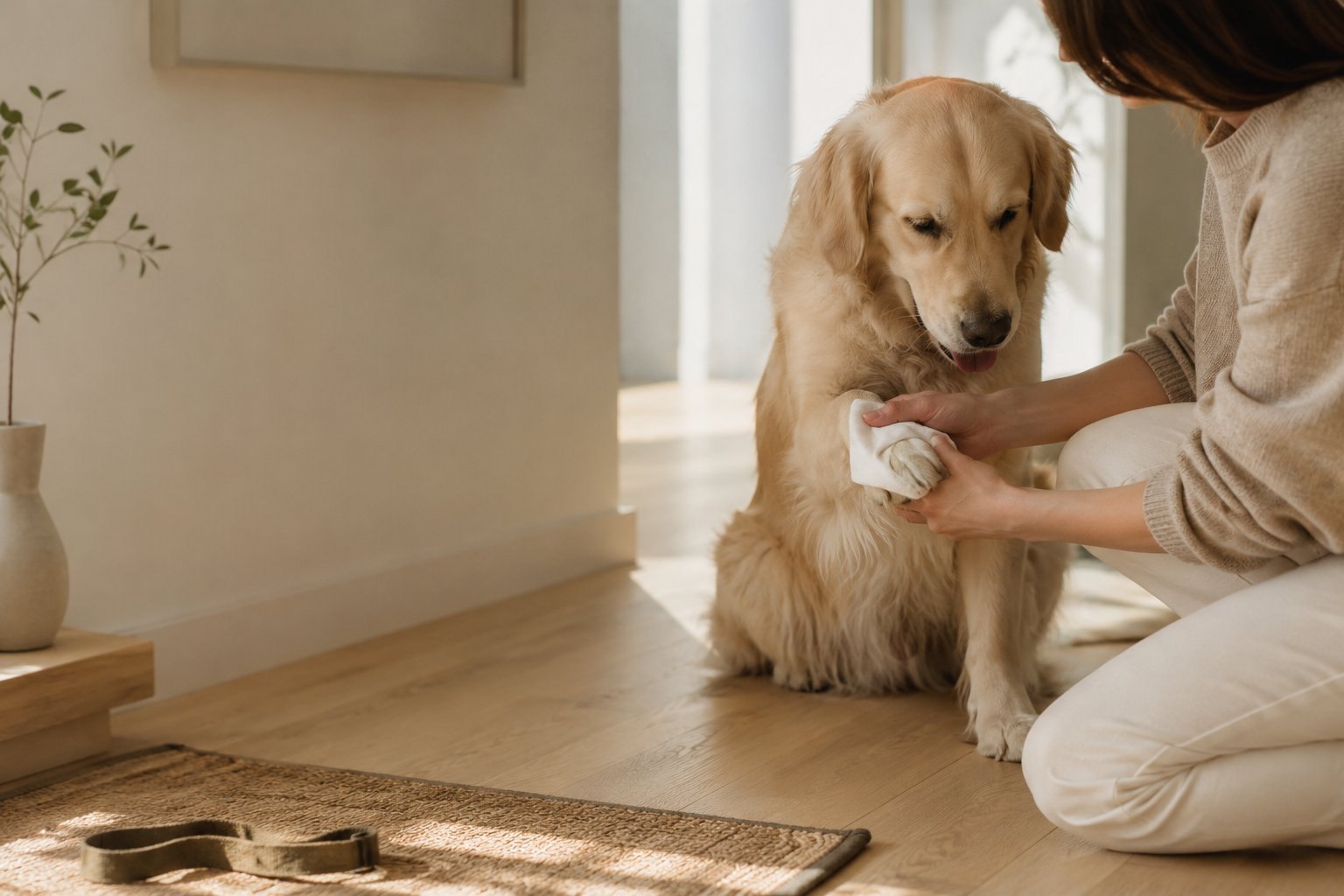
Paw care for dogs: how to clean your dog’s paws properly after a walk
A simple routine that keeps the outside world outside — and keeps your dog comfortable.
Every walk brings home more than just good memories. Dirt, pollen, bacteria and invisible residues from the environment collect on your dog’s paws.
What seems harmless can be uncomfortable for your dog — and is often why dogs lick their paws or react sensitively after a walk.
A simple, regular paw-care routine helps you avoid exactly that.
Why is cleaning dog paws so important?
A dog’s paws face many stresses every day. Unlike our shoes, they are unprotected and in direct contact with the ground.
Typical residues after a walk:
- Dirt and dust from pavements
- Pollen and allergens from grass and plants
- Bacteria and germs
- Mud and moisture
- Road salt in winter
- Chemical residues (e.g. fertiliser)
Many dogs lick their paws clean afterwards — taking in exactly these substances.
Regular cleaning can help reduce skin irritation and lower the risk of inflammation.
When should you clean your dog’s paws?
Not every walk calls for the same effort, but in these situations paw care matters most:
- After walks in the rain or mud
- After trips through woods, meadows or fields
- During pollen season (important for allergies)
- In winter, with road salt and snow
- After the dog park or busy paths
- In the city, with heavy traffic and residues
Dogs with sensitive skin or allergies benefit especially from a daily routine.
Cleaning dog paws after a walk – step by step
Paw care doesn’t have to be complicated. A few minutes are enough.
1. Check the paws
Briefly check each paw:
- Small stones or foreign objects between the toes
- Redness or swelling
- Small cuts or cracks
- Matted fur
2. Remove dirt
Depending on how dirty they are:
- Light dirt: wipe with a damp cloth
- Heavier dirt: rinse with lukewarm water
- Clean especially thoroughly between the toes
3. Gentle cleaning, at home or on the go
Dedicated dog wipes are practical because they:
- are ready to use instantly
- clean between the toes too
- mean less stress for your dog
- are ideal for on the go
Look for:
- an alcohol-free formula
- no artificial fragrances
- skin-friendly ingredients
The kofes. Pet Glove Wipes come in an extra-large glove format (23 × 25 cm) — big enough to wrap a whole paw in a single wipe. Plant-based fibres, alcohol-free, fragrance-free.
View the collection →4. Dry the paws
Moisture can encourage skin problems. So always dry the paws well — including between the toes.
Why do dogs lick their paws after a walk?
Paw licking is often a sign that something is bothering them.
Common causes:
- Pollen or allergens
- Dirt and residues
- dry or irritated skin
- road salt in winter
- small irritations between the toes
Regular cleaning can help reduce these triggers. If the licking is persistent or very intense, you should consult a vet.
Paw care in winter and summer
Winter: road salt and cold
- Salt dries out the skin and can sting
- Cleaning after every walk matters most
- Optional: paw balm for protection
Summer: hot asphalt
- Asphalt can get very hot and damage the pads
- Walk in the morning or evening instead
- Check the paws regularly for cracks
How often should you clean dog paws?
For most dogs:
- A quick clean after every walk
- A thorough clean when very dirty
It’s not about perfection — it’s about removing residues before they cause problems.
Frequently asked questions about paw care
Do I really need to clean my dog’s paws every day?
A quick wipe after every walk is recommended, especially in the city or in bad weather.
Which is better: water or dog wipes?
Both have their advantages. Water is thorough; dog wipes are more practical day to day and on the go.
Are regular wet wipes suitable?
No. They can contain alcohol or fragrances that irritate the skin. Use dedicated dog wipes.
What should I do about cracked paws?
Paw balm can help. For severe cracks or inflammation, consult a vet.
A small routine, a big difference
Paw care is a simple habit with a big effect. It protects your dog’s health, reduces paw licking and keeps your home cleaner at the same time.
With the right routine — and the right tools — it becomes a quick, stress-free part of your day together.